About
What this survey is, how it selects, and what it refuses to do.
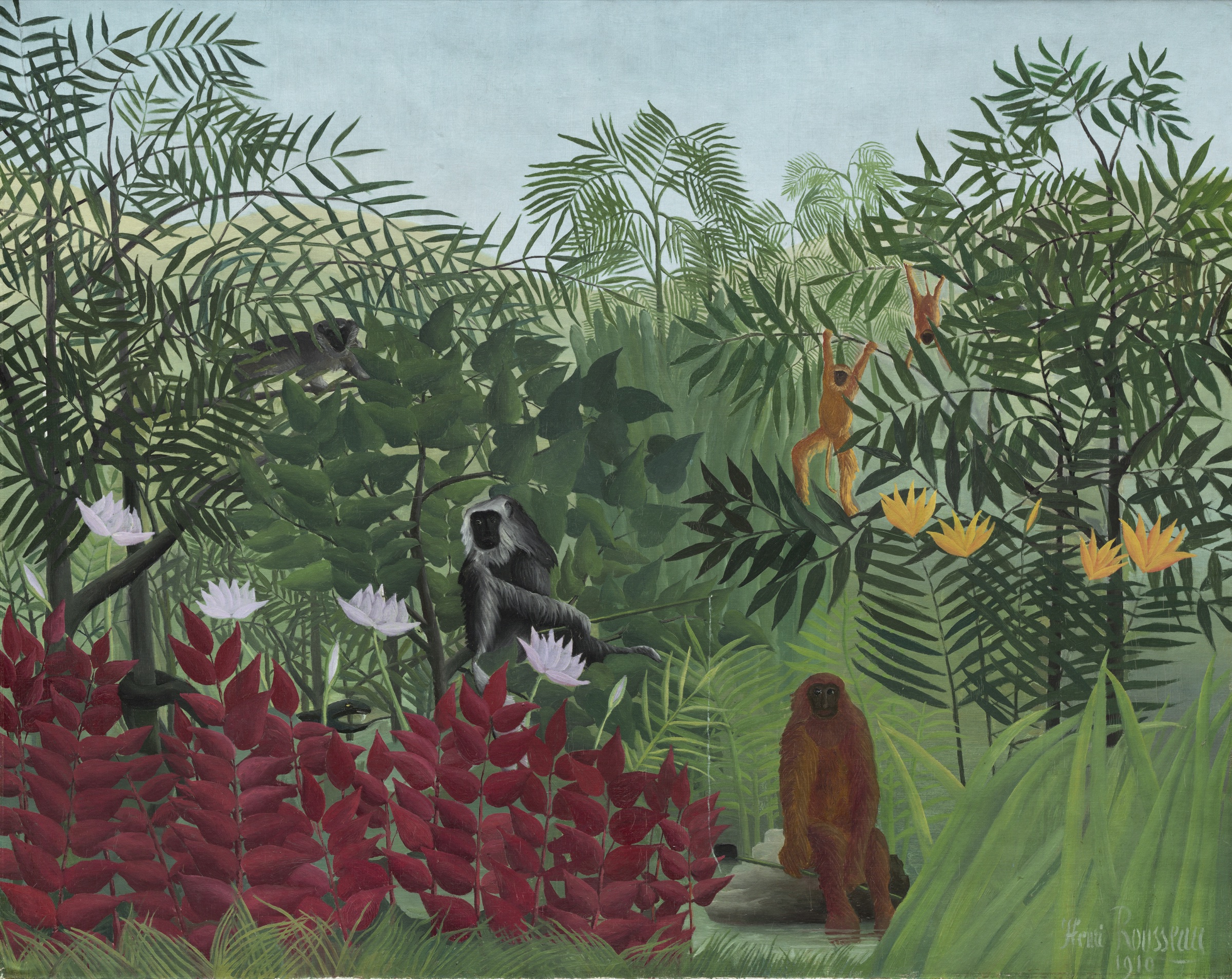
Tropical Forest with Monkeys, Henri Rousseau, 1910. National Gallery of Art, Washington (accession 61253). CC0. Credits
What this is
A survey of repositories for research work, addressed to researchers, doctoral students and research engineers. Each entry traces to a recorded campaign: a frozen question, stated screening rules, a sealed evidence ledger. An entry page shows the campaign's own record plus dated public metrics — nothing more is asserted. This is a method-curated survey, dated on every page. Not an audit, not an endorsement.
What the survey selects on
Selection is by documented method first; popularity is reported second, as data. A research tool earns trust by naming the case it gets wrong — so campaign claims carry their own stated ceilings, and the ledgers record excluded candidates and why. The survey's recall is a number the blind arm described on the methodology page is designed to measure; that arm has not yet run. We do not rank anything.
How entries get here
A campaign begins with a registered question and scope. Screening applies the campaign's stated inclusion rules; admitted evidence lands in a ledger; the record is sealed. The entry page quotes the campaign's coverage claim word for word — never upgraded — because a claim needs a source that can be checked. Metrics come from a single dated snapshot of the public API, hashed at capture (its coverage and limits are on the data card). What that hash can and cannot prove is stated beside the rest of the standard. The full standard an entry is held to is published on the methodology page.
The research behind it
The survey is built to become a longitudinal instrument. The question: how do method-curated relevance and community popularity co-evolve in open-source practice ecosystems? One cross-sectional signal, measured on the full campaign ledgers rather than this hub's entries (the full corpus is not yet published): the repository the ledgers cite most often has zero stars. The weekly design turns that contrast into a testable time series rather than a claim. The database behind this site is under a licensing review and is intended to be opened.
Built by
A small research effort, unaffiliated: not sponsored, reviewed or endorsed by any institution. No entry paid for placement, and no advisory board is claimed. Entry descriptions are the curators' own words, labeled editorial drafts until they clear external review.
Imagery and licensing
The artwork is archival natural-history illustration plus one generated hero image, each credited on the band where it appears and in full on the credits page; a plate that cannot fill its six provenance fields does not appear. Our own text is reusable with attribution. Every repository shown remains under its own license, named on its entry.
Contributing
There is no submission channel. Entry is by campaign: a task's campaign either finds a repository or records that it did not, and the ledger shows which. If the map disagrees with your sense of the field, read the methodology and then the campaign's claim — the gap may be real, and a contact route for exactly that arrives with the licensing review.
Contact
No public contact route yet. One opens when the licensing review lands.
The standard · Provenance and caveats · Image credits · License and citation